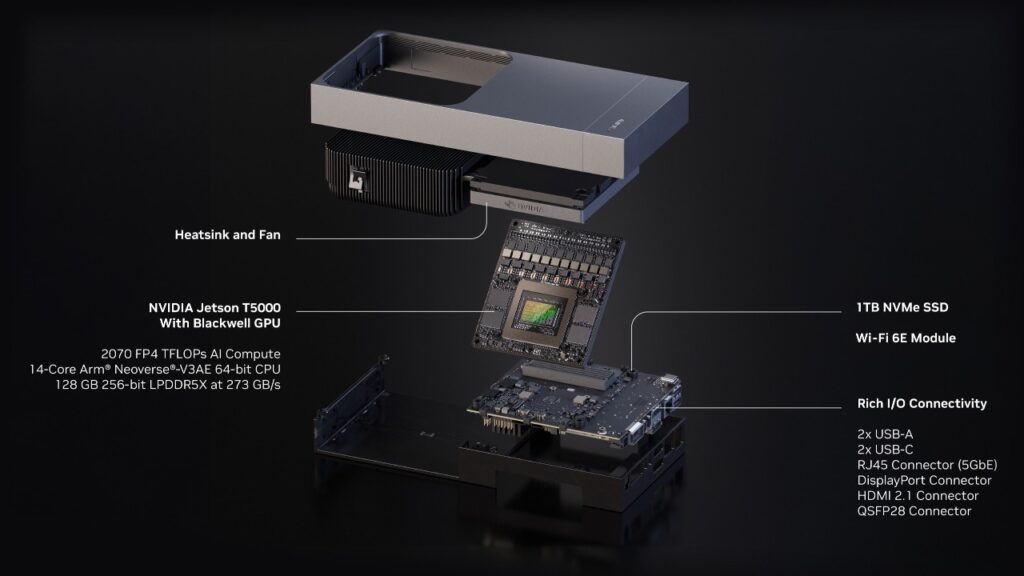
The NVIDIA JetPack SDK is the software foundation for every Jetson deployment, from developer kit prototyping to production edge AI systems. JetPack 7 represents a major update that brings the Jetson platform in line with the latest NVIDIA data center software stack while adding support for the new Jetson AGX Thor.
Here’s what’s new in JetPack 7 and why it matters for your edge AI development.
What’s in JetPack?
For those new to the Jetson ecosystem, JetPack is a comprehensive SDK that includes:
- L4T (Linux for Tegra): The operating system (Ubuntu-based)
- CUDA Toolkit: GPU programming framework
- cuDNN: Deep learning primitives library
- TensorRT: High-performance inference optimizer
- VPI (Vision Programming Interface): Computer vision acceleration
- Multimedia API: Hardware-accelerated video encode/decode
- NVIDIA Container Runtime: Docker with GPU support on Jetson
Key Updates in JetPack 7
Jetson Thor Support
The most significant addition is full support for the Jetson AGX Thor platform. This includes Blackwell GPU drivers, fifth-generation Tensor Core libraries, and FP4 precision support through TensorRT. Existing JetPack 6.x applications targeting Orin modules will require minimal changes to run on Thor, the API surface remains compatible.
Updated CUDA Toolkit
JetPack 7 ships with the latest CUDA toolkit, bringing Blackwell-specific optimizations, improved cooperative groups, and enhanced memory management APIs. For developers writing custom CUDA kernels, the new toolkit provides better tooling for profiling and debugging on both Orin and Thor platforms.
TensorRT Improvements
The updated TensorRT version adds:
- FP4 quantization for Thor’s fifth-gen Tensor Cores
- Improved transformer model support with better attention layer optimization
- Faster engine building with parallel compilation support
- Better dynamic shape handling for models with variable input sizes
Container and Microservice Support
JetPack 7 significantly improves the container ecosystem:
- NVIDIA NIM support: Run NVIDIA Inference Microservices on Jetson for standardized model deployment
- Pre-built containers: Expanded catalog of optimized containers for common AI workloads
- Kubernetes integration: Better support for fleet management with K3s and MicroK8s
Security Enhancements
Enterprise deployments benefit from:
- Secure boot chain improvements
- Hardware-backed encryption for NVMe storage
- Enhanced UEFI Secure Boot support
- Improved OTA (Over-the-Air) update mechanisms for fleet deployments
Migration from JetPack 6
For developers currently on JetPack 6.x:
- Application code: Most applications will work without changes. The CUDA and TensorRT APIs are backward compatible.
- TensorRT engines: You’ll need to rebuild TensorRT engines, they’re not portable across TensorRT versions.
- Container images: Update your base images to JetPack 7, the L4T base container tag changes.
- Custom board support packages: If you have a custom carrier board BSP, it will need updates for the new L4T version.
Getting Started
Download JetPack 7 from the NVIDIA SDK Manager (recommended) or as a standalone SD card image from the NVIDIA Developer website. The SDK Manager handles dependencies and flashing automatically, it’s the smoothest path to a working JetPack 7 environment.
The Bottom Line
JetPack 7 is a necessary upgrade for anyone planning to use Jetson Thor, and a worthwhile upgrade for Orin developers who want the latest TensorRT optimizations and container support. The backward-compatible APIs mean migration risk is low, while the performance gains from updated libraries are meaningful.
Planning your JetPack migration or starting a new Jetson project? Contact us for development kit recommendations and software integration support.