RTX PRO 6000 Blackwell Server Edition is one of the more interesting GPUs in NVIDIA's 2025 enterprise lineup because it sits between classic visualization hardware and full data center AI infrastructure. That makes it easier to place than a giant HGX build, but harder to buy correctly. The appeal is clear: 96GB of GDDR7 memory, Blackwell generation tensor performance, passively cooled server deployment, Multi-Instance GPU support, and a design that can handle AI inference, rendering, simulation, and virtual workstation work in the same environment.
For buyers planning a new inference cluster or refreshing older L40S era systems, the main question is not whether this GPU is fast. It is whether the mix of memory, flexibility, density, and software support matches the workload mix already in production. That is where this part stands out.
- What the card is built for
- RTX PRO 6000 Blackwell Server Edition specs that matter
- Where it fits better than a bigger AI system
- Buyer checklist before deployment
- Verdict
What the card is built for
NVIDIA positions this GPU as a universal data center part for enterprise AI and visual computing. That matters because most real deployments are mixed. A single environment may run multimodal inference during the day, virtual workstations for design teams, rendering jobs at night, and analytics or simulation when capacity is free. A part built only for one narrow task creates waste. A part built for mixed demand is easier to keep busy.
That is the strongest argument for this GPU. It is not only about raw throughput. It is about using one platform for several revenue producing workloads without moving teams onto separate hardware islands. NVIDIA also adds support for Confidential Computing and lets the GPU split into up to four isolated MIG instances. For organizations serving multiple internal teams, that isolation is often more valuable than a headline benchmark.
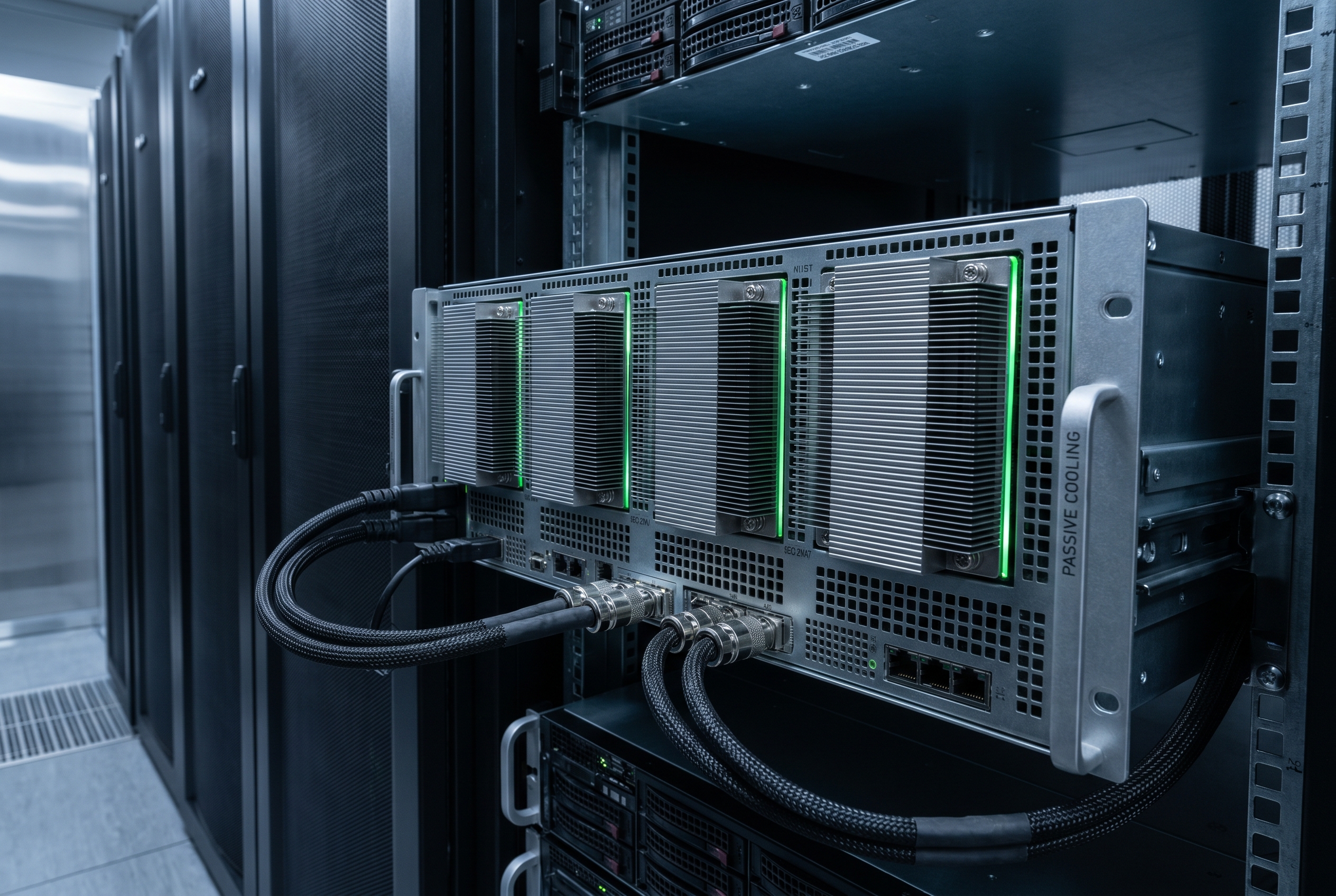
There is also a simpler point. This is a server part. Passive cooling, 24 by 7 operation, and compatibility with dense rack servers make it easier to scale than a workstation card repurposed for the data center. That alone will matter to IT teams standardizing on rack infrastructure.
RTX PRO 6000 Blackwell Server Edition specs that matter
The focus keyword matters here because the RTX PRO 6000 Blackwell Server Edition is not just a renamed workstation board. It changes the buyer conversation in a few useful ways.
| Area | What stands out | Why buyers care |
|---|---|---|
| Memory | 96GB GDDR7 | More room for larger models, bigger context windows, and heavier visual datasets without immediate scale out. |
| Partitioning | Up to 4 MIG instances with 24GB each | Helps split one GPU across smaller inference or graphics jobs with cleaner isolation. |
| Precision | Blackwell tensor features with FP4 support | Useful for higher throughput inference when the software stack is optimized for reduced precision. |
| Security | Confidential Computing support | Important for regulated teams handling sensitive models and data in use. |
| Deployment style | Passive server cooling | Fits better into standard rack servers than workstation style cooling designs. |
NVIDIA's own launch material compares this part against L40S across several enterprise workloads. The published message is not subtle: higher LLM inference throughput, faster genomics and protein workflows, stronger text to video performance, and better rendering speed. The exact gain will depend on model size, precision, batch shape, memory pressure, and software tuning, but the direction is clear. This is the newer and broader enterprise part.
That broader role matters more than a single benchmark number. If the deployment needs a GPU that can serve agentic AI, recommender systems, digital twins, and remote visualization from the same cluster, this card makes more sense than a narrower accelerator choice.
Where it fits better than a bigger AI system
Not every buyer needs an HGX or DGX style build. In fact, many do not. A lot of teams are deploying inference microservices, retrieval pipelines, design visualization, simulation, and a modest amount of fine tuning. Those jobs need serious GPU memory and solid software support, but they do not always need the cost, power, networking, and operational complexity of the largest AI platforms.
This is where the card makes sense:
- Enterprise inference clusters serving internal copilots, search, or multimodal assistants
- Mixed AI plus graphics environments that would otherwise need separate GPU pools
- Virtual workstation deployments with heavier AI assisted design workloads
- Healthcare, manufacturing, and financial environments where isolation and security matter
- Organizations modernizing from older L40S class infrastructure without jumping straight to top tier AI factory designs
It also fits neatly with the rest of NVIDIA's software stack. Teams already planning around NVIDIA AI Enterprise, NIM microservices on Kubernetes, or the broader product direction outlined in recent GTC platform launches can use this part as a practical bridge between workstation class experimentation and rack level production.
For official product details, NVIDIA's product page is the best starting point. That page, along with the launch coverage and developer notes, makes it clear that this GPU was built for enterprise environments that need flexibility as much as speed.
Buyer checklist before deployment
Before ordering, check these five items.
- Workload mix: If the plan is pure large scale training, there are better fits. If the plan is mixed inference, rendering, VDI, and simulation, this part becomes more compelling.
- Memory headroom: 96GB is a real advantage when model growth keeps pushing deployments past comfortable limits.
- Software readiness: The best results depend on using optimized stacks such as TensorRT, NIM, and modern inference runtimes.
- Server density: Confirm chassis, thermals, power delivery, and networking before assuming a simple drop in upgrade.
- Tenant isolation: If multiple teams will share the cluster, MIG support should be part of the purchasing logic from day one.
The mistake to avoid is buying this card only for its headline specs. The right reason to buy it is that it consolidates several enterprise workloads onto one flexible server platform. That is where the value shows up over time.
Verdict
RTX PRO 6000 Blackwell Server Edition looks like a smart buy for organizations that need enterprise AI acceleration without jumping straight to the largest rack scale systems. It has enough memory to stay relevant, enough flexibility to support mixed teams, and enough data center discipline to fit serious production environments. For buyers moving beyond pilot projects, but not yet building a full AI factory, this may be the most practical GPU in the current NVIDIA stack.
Need help sizing the right NVIDIA configuration for inference, graphics, or mixed enterprise AI? Contact NVNexus for a deployment recommendation built around your workload, rack limits, and growth plan.